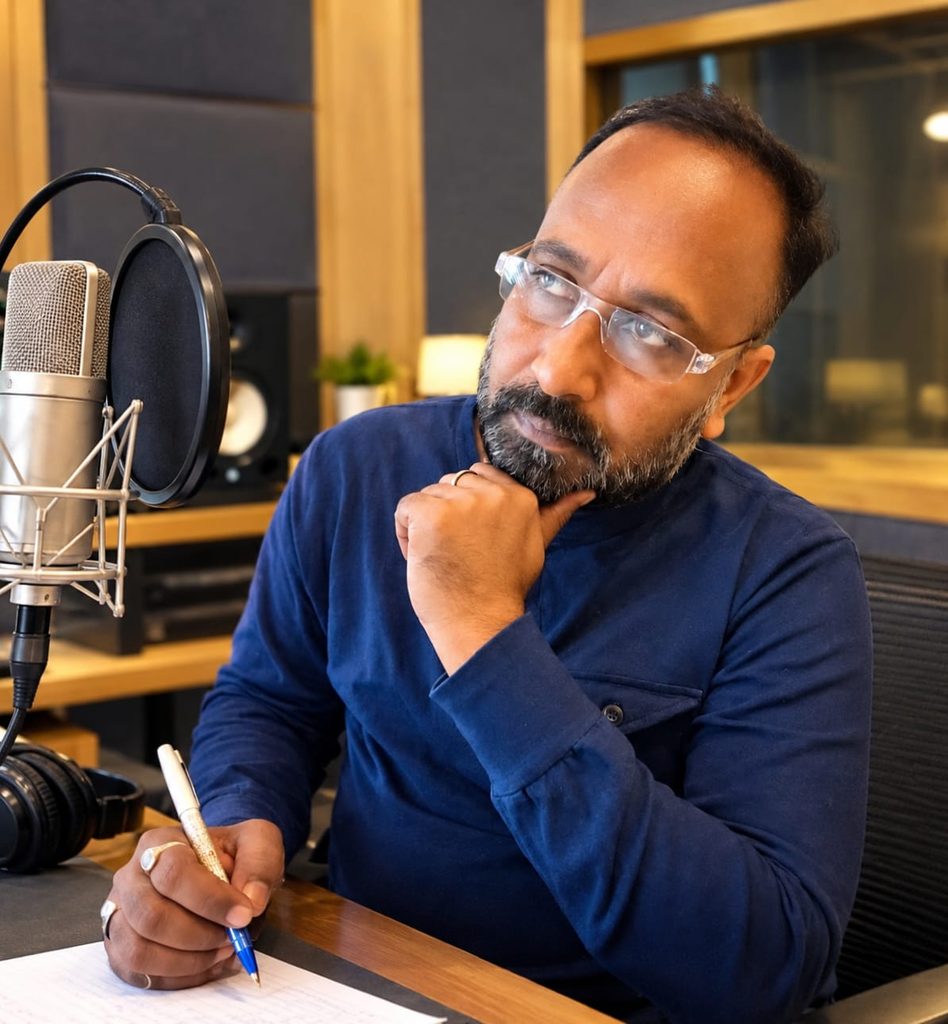
Mumbai: For almost two decades, lyricist Sahil Sultanpuri continued to write songs without becoming a familiar name among mainstream music listeners. That changed with ‘Akhiyaan Milavanga’ from Commando 3. The song brought his writing to a much wider audience and prompted listeners to discover the lyricist behind its words.
Sahil’s journey in Mumbai began in 1999, when the country was caught up in the excitement surrounding the Cricket World Cup. At the T-Series office, the young lyricist received a challenging assignment—to write a patriotic song for the album Jeetenge Hum Hindustani within a very short deadline.
With the melody already prepared, Sahil completed the lyrics within minutes. He was subsequently asked to sing the song himself so that the team could assess whether the words fitted the composition. Although singing was not his primary strength, the experience became an important early milestone in his career as a lyricist.
Roots Linked to Sultanpur’s Literary Tradition
The name Sultanpuri carries a connection to Sultanpur in Uttar Pradesh, a region associated with Hindi and Urdu literary traditions. The area is also linked with celebrated lyricist Majrooh Sultanpuri and Urdu poet Ajmal Sultanpuri. Sahil has retained “Sultanpuri” as part of his professional identity, reflecting that connection to his roots.
His career, however, developed gradually rather than through immediate success. He wrote the title track and ‘Kamrein Mein Aaja’ for Kudiyon Ka Hai Zamaana, working with composers Yasin and Iqbal Darbar. He also explored dialogue writing with Mohabbat Zindabad.
His lyrics featured in Gangor (2010), an Italian production based on a story by acclaimed Bengali writer Mahasweta Devi.
For Mai (2013), starring Asha Bhosle in her acting debut, Sahil wrote ‘Dhakku Makum’, a monsoon-themed song that was unveiled at Lalbaugcha Raja during Ganesh Chaturthi.
He subsequently wrote all the songs for Black Home (2015), a drama set inside a girls’ remand home. The songs featured voices including Asha Bhosle, Hariharan and Suraj Jagan.
The Song That Remained Close to Him
Among his earlier works, Sahil has particularly valued ‘Husn Wale Farebi’, his qawwali from Saat Uchakkey, produced by Neeraj Pandey. While the song remains important to him, he has expressed the view that it did not receive the level of promotion he believed it deserved.
Yet the limited visibility did not discourage him. He continued writing, waiting for an opportunity that would take his work to a much larger audience.
‘Commando 3’ Became the Turning Point
The opportunity arrived with Commando 3. Sahil has acknowledged that he had not expected to become part of such a major action-film project.
His association with the film came through composer Mannan Shaah, whom he had met through a friend shortly before production began. Their collaboration resulted in ‘Akhiyaan Milavanga’, sung by Arijit Singh and Sruthy Sasidharan.
The song combines Hindi with light Punjabi phrasing. Although Sahil comes from Uttar Pradesh, he developed familiarity with Punjabi through friends, reflecting his approach of allowing language and musical expression to grow naturally through everyday interactions.
The success of the song gave Sahil something that years of writing had not brought him on the same scale—recognition from listeners who were discovering his name for the first time.
Continuing the Journey
The success of Commando 3 was not the end of his creative journey. Sahil later wrote ‘Main To Adhura’ for Amar Prem Ki Prem Kahani (2024) and ‘Thaari Jogan’ for The Kerala Story 2 (2026).
His work has also moved beyond conventional film music. In collaboration with composer Sunil Koshy, he worked on ‘Hum Shakti Hain’, an anthem associated with acid attack survivors and released around International Women’s Day in 2021.
He also contributed to the World Music Day anthem ‘Sangeet Mera Ishq Hain’ in 2019.
Recognition Beyond a Name on the Credits
Sahil’s career also reflects the wider issue of recognition and royalties for Indian lyricists and composers. The 2012 amendment to India’s Copyright Act strengthened statutory royalty rights for authors of literary and musical works used in films, following sustained advocacy by figures including Javed Akhtar.
For lyricists, recognition is therefore not limited to seeing their names on screen. It also concerns the creative value of the words written before a song reaches millions of listeners.
Why He Continued Writing
Despite years in which recognition remained limited, Sahil never seriously considered abandoning songwriting. His belief was straightforward: after investing so many years in developing his craft, walking away would mean beginning again elsewhere.
That persistence remains a defining part of his career. He continues to draw inspiration from writers such as Gulzar, Javed Akhtar, Majrooh Sultanpuri and Anand Bakshi. Among contemporary lyricists, he admires Irshad Kamil, while Pritam is a composer with whom he hopes to collaborate.
Sahil Sultanpuri’s story is ultimately not one of instant Bollywood success. It is the story of a lyricist who arrived in Mumbai in 1999, kept writing through years of limited public recognition and eventually reached a far wider audience through Commando 3.
From writing a patriotic song against a tight deadline at the T-Series office to having his words carried to millions through singers such as Arijit Singh, his journey underlines a familiar truth of the creative world: sometimes the work becomes known long before the person behind it—and sometimes recognition simply takes time.