New initiative positions CSIR-CGCRI to contribute to India’s growing quantum and semiconductor technology ecosystem
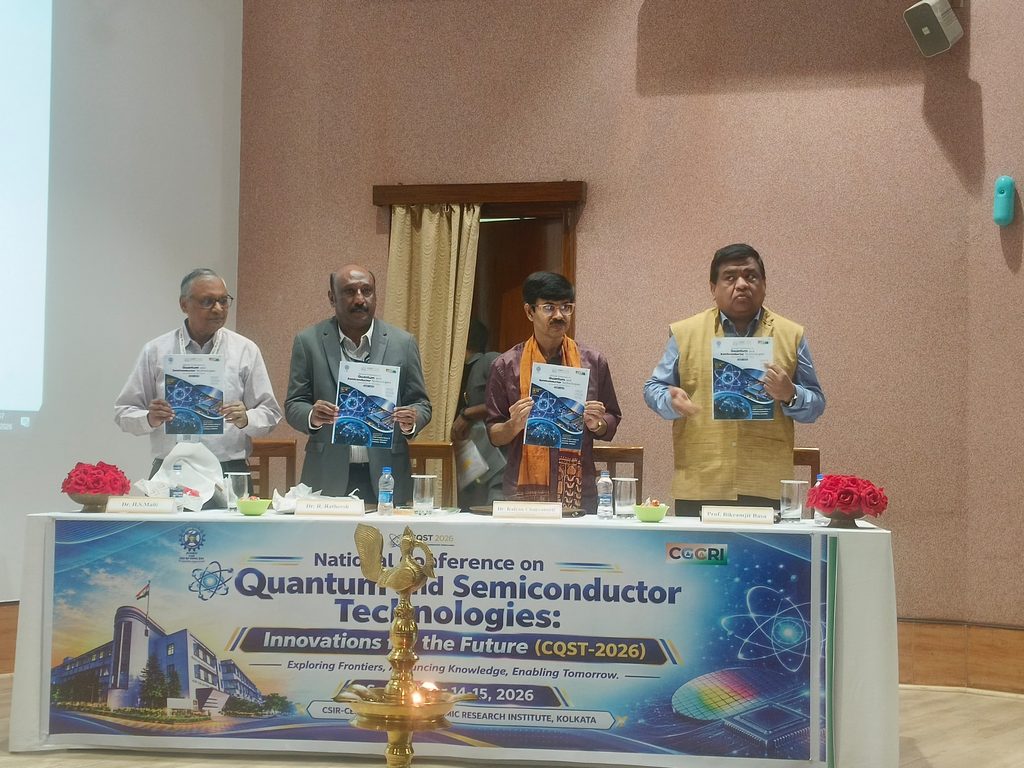
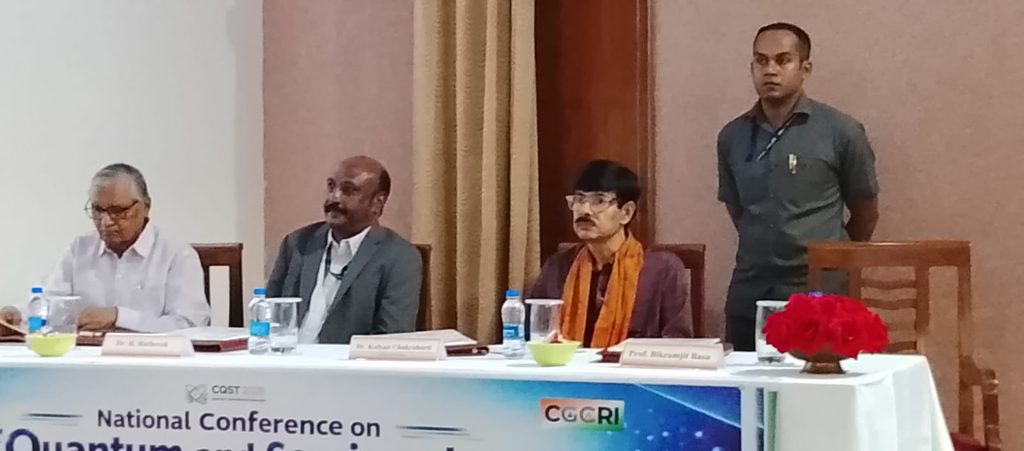
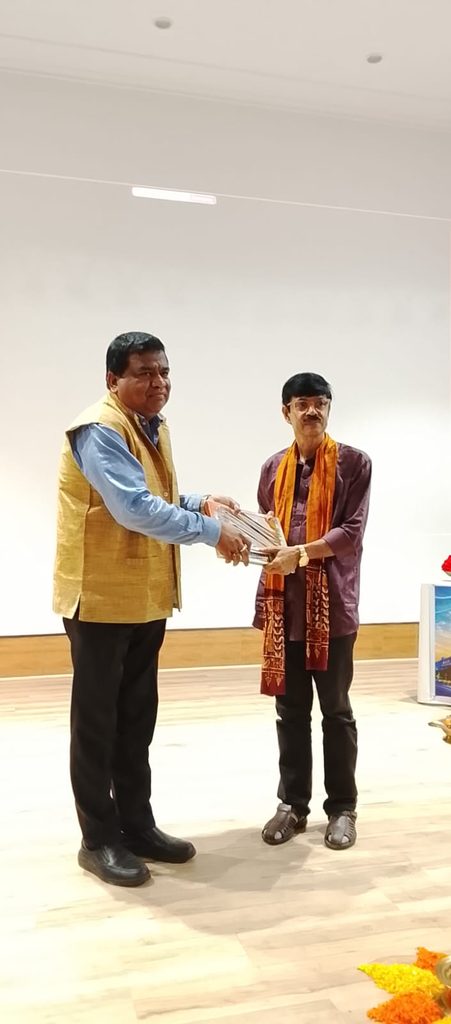
Kolkata, September 2026: Dr. Kalyan Chakraborti, Minister-in-Charge, Department of Science and Technology and Biotechnology, Government of West Bengal, today inaugurated the Two-Day National Conference on “Quantum and Semiconductor Technologies: Innovations for the Future (CQST-2026)” at CSIR-Central Glass and Ceramic Research Institute (CSIR-CGCRI), Kolkata. On the occasion, he also formally launched the Emerging Quantum and Semiconductor Technologies (EQST) Section at CSIR-CGCRI, marking a significant new initiative towards strengthening research and innovation in these strategically important technologies.
Congratulating the Director, scientists and staff of CSIR-CGCRI for bringing together leading researchers and experts working at the frontiers of quantum science and semiconductor engineering, Dr. Chakraborti underscored the growing importance of these technologies for India’s economic competitiveness, technological sovereignty and national security.
The programme commenced with a welcome address by Prof. Bikramjit Basu, Director, CSIR-CGCRI, who highlighted the Institute’s extensive research and development contributions over the decades in glass, ceramics, optical fibre, photonics and other advanced materials. He noted that India currently ranks the second globally in peer-reviewed research publications over last two decades, in glass and ceramics. This reflects the country’s strong scientific foundation and its potential to contribute significantly to the vision of Viksit Bharat @2047.
Dr. R. Ratheesh, Director General, C-MET, Pune, highlighted the critical importance of developing indigenous capabilities in high-purity raw materials, advanced materials synthesis and critical minerals, which form the technological backbone of next-generation semiconductor and quantum technologies.
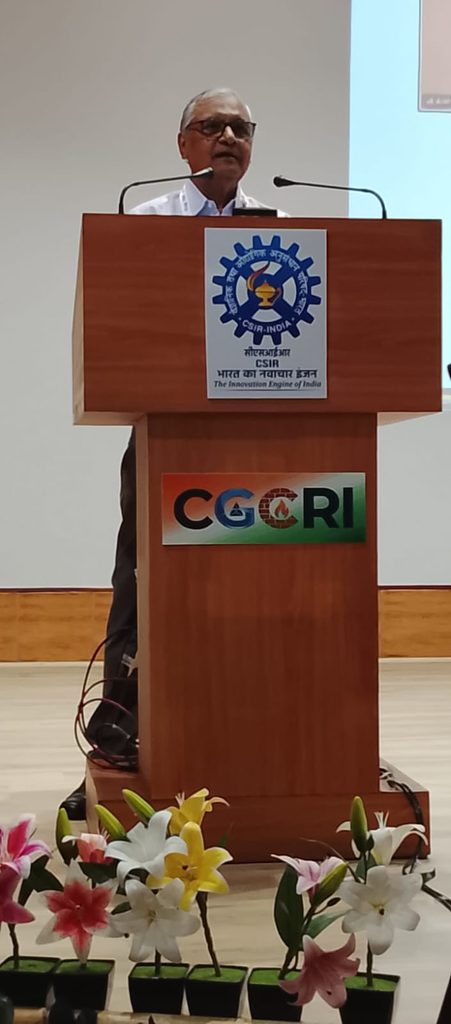
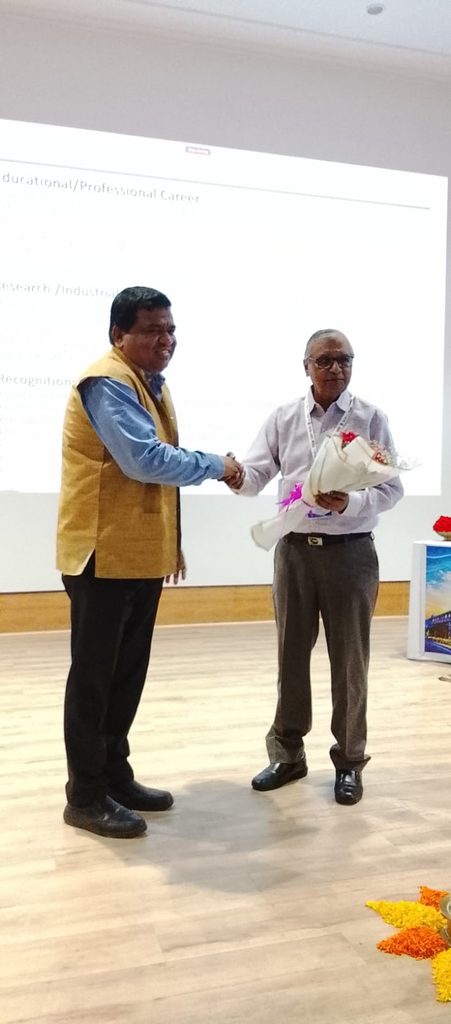
Dr. H. S. Maiti, Former Director, CSIR-CGCRI, shared his experiences and reflections on the establishment and development of several laboratories at the Institute, many of which continue to make significant contributions to national technological development. His address underscored the importance of building enduring research capabilities and institutions that can respond to emerging national priorities.
Addressing the gathering as Chief Guest, Dr. Kalyan Chakraborti observed that some of the most consequential transformations in history have originated from seemingly quiet advances within laboratories. He noted that the world is currently witnessing such a transition with the rapid emergence of quantum technologies and semiconductors.
Drawing a parallel with earlier technological eras, he observed that just as steel and electricity shaped the industrial age and software transformed the information age, mastery of the qubit and the chip is poised to influence the economy, national security architecture and everyday life in the decades ahead.
He emphasised that nations across the world are making substantial investments in these strategic technologies and stated that India cannot afford to remain a bystander in this global transition.
Referring to the establishment of CSIR-CGCRI in 1950 and the legacy of Dr. Bidhan Chandra Roy, Dr. Chakraborti said that it was particularly fitting that this new chapter in advanced technology research should begin at CGCRI.
He noted that the history of CSIR-CGCRI and the development of West Bengal’s scientific ecosystem have been closely intertwined since the Institute’s inception. Over the past 75 years, CSIR-CGCRI has played a pioneering role in building national capabilities in glass, ceramics, optical fibre and photonics.
According to him, these capabilities provide a strong and natural foundation for the Institute to expand into emerging areas such as superconducting quantum platforms, two-dimensional quantum materials, single-electron transistors and advanced photonics for quantum devices.
He described the newly launched EQST Section as “not a departure from CGCRI’s legacy, but its logical next step”, reflecting the Institute’s ability to evolve its research portfolio in response to emerging national and global technological priorities.
Dr. Chakraborti emphasised that West Bengal has significant scientific and academic strengths that can support the development of a vibrant quantum and semiconductor ecosystem.
Referring to the initiatives undertaken by States such as Andhra Pradesh, Odisha, Gujarat, Uttar Pradesh, Assam and Karnataka, he noted that early policy interventions, infrastructure development and effective partnerships with the Government of India have enabled these States to position themselves as attractive destinations for national semiconductor investments.
He stressed that West Bengal has every reason to be counted among these leading States, given its distinguished scientific heritage and rich institutional ecosystem.
He recalled the contributions of eminent scientists such as Jagadish Chandra Bose, Satyendra Nath Bose and Meghnad Saha, whose pioneering work laid important foundations for modern physics, quantum mechanics and semiconductor science.
He further highlighted the presence of leading institutions in the State, including the Indian Association for the Cultivation of Science (IACS), S. N. Bose National Centre for Basic Sciences, Indian Statistical Institute, IIT Kharagpur, IIEST Shibpur, NIT Durgapur and CSIR-CGCRI.
Dr. Chakraborti also referred to initiatives announced in the State Budget, including a Science and Technology Talent Attraction Fund, Incubation Fund and Venture Capital Fund, aimed at nurturing deep-technology start-ups.
He observed that West Bengal’s challenge has not been a lack of scientific talent or ambition, but the absence of a sufficiently focused institutional anchor for quantum and semiconductor research. In this context, he described the establishment of the EQST Section at CSIR-CGCRI as an important step towards creating such an anchor.
Dr. Chakraborti expressed confidence that the shared commitment of the Government of India and the Government of West Bengal can create new opportunities for closer coordination between national programmes and State-level implementation.
He expressed his commitment to working with CSIR-CGCRI, the Department of Science and Technology and relevant State departments to explore mechanisms for facilitating quantum and semiconductor investments in West Bengal.
He also proposed strengthening linkages between the newly established EQST Section and the Thematic Hubs of the National Quantum Mission, while encouraging universities and industry to develop collaborative research, technology development and skill-development programmes around the emerging ecosystem.
He further emphasised the importance of nurturing start-ups and entrepreneurial ventures emerging from cutting-edge research in quantum and semiconductor technologies.
Encouraging young researchers and students participating in CQST-2026, particularly those presenting their research through posters during the conference, Dr. Chakraborti said that they have entered the field at a particularly important moment in its evolution.
He urged the young researchers to “be ambitious, collaborate widely” and to look beyond academic training towards building long-term research careers and laboratories in West Bengal.
He emphasised that the State’s rich scientific heritage and institutional strengths provide a strong foundation for the next generation of researchers to contribute to India’s technological future.
The launch of the Emerging Quantum and Semiconductor Technologies Section at CSIR-CGCRI, together with the National Conference CQST-2026, represents an important step towards expanding the Institute’s research horizons and contributing to India’s aspirations for technological self-reliance and leadership in next-generation technologies.
The conference brings together researchers, academicians, technologists, industry representatives and young scientists from multiple institutes, like IIT Kanpur, IIT Bombay, TCG Crest, etc., to deliberate on emerging developments, challenges and opportunities in quantum technologies, semiconductor science, advanced materials, devices and associated technologies.
photo Credit: Mr.Soumik Banerjee