Pune: Researchers from MIT World Peace University (MIT-WPU) have developed an innovative retrofit technology designed to reduce industrial noise generated during abrasive cutting operations by up to 20 dB(A), while also helping contain sparks, dust and flying debris.
The technology has been developed by Dr. Rohit Raghunath Ghadge and Dr. Mahesh Vasantrao Kulkarni, faculty members of the Department of Mechanical Engineering at MIT-WPU, along with Mr. Yash Utsahi Chavande, PhD Scholar in Mechanical Engineering. The innovation takes the form of a compact, machine-mounted protective enclosure that can be integrated with both existing and new abrasive saw machines.
Abrasive saws are extensively used in fabrication workshops, manufacturing plants, construction sites, automotive facilities, railway maintenance units, shipyards and engineering industries. However, these machines can routinely generate noise levels of approximately 95–110 dB(A). Prolonged exposure to such high noise levels can interfere with communication and concentration and adversely affect worker comfort and workplace safety.
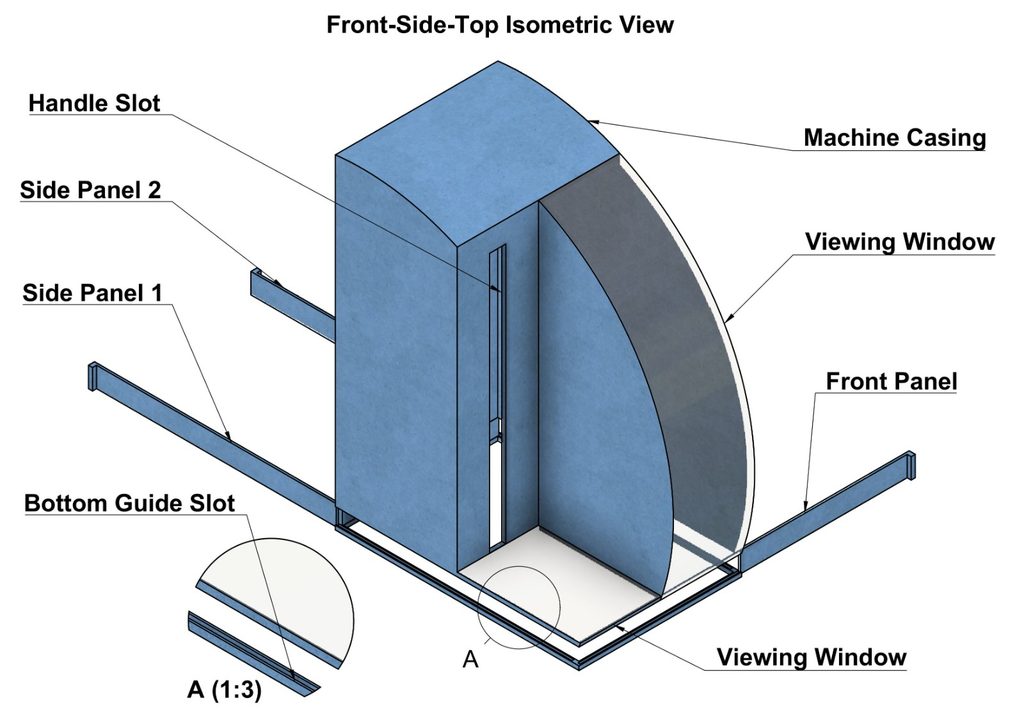
Unlike conventional abrasive saw guards, which generally provide only partial protection, the newly developed enclosure surrounds the cutting region with a specially engineered housing. It incorporates transparent viewing windows and adjustable sliding panels, enabling operators to monitor cutting operations safely while accommodating workpieces of different sizes and maintaining accessibility to the machine.
A distinctive feature of the design is its combination of a rectangular rear section and a curved front profile. The geometry is intended to redirect and contain sound waves produced during cutting while simultaneously serving as a physical barrier against sparks, metallic particles and dust.
“Industrial workplaces are increasingly focusing on worker welfare and occupational health. Our objective was to develop a compact solution that addresses multiple workplace challenges simultaneously—noise exposure, flying debris, dust generation and operator safety—without requiring large acoustic cabins or major infrastructure changes,” said Dr. Mahesh Vasantrao Kulkarni.
The research team also evaluated advanced hybrid acoustic materials incorporating E-glass fibre, basalt fibre and perforated aluminium layers to improve the enclosure’s sound-control capabilities. Laboratory testing conducted in accordance with ASTM E1050-19 standards demonstrated sound absorption coefficients of up to 0.98, while sound transmission loss values reached as high as 30 dB(A) across frequency ranges commonly associated with industrial machinery noise.
Based on these material-level results and the enclosure’s acoustic containment design, the researchers anticipate a practical noise reduction of approximately 10–20 dB(A) after prototype testing under actual operating conditions. The researchers emphasise that field validation will be necessary to establish the final performance of the complete system.
“The inspiration for this invention came from observing abrasive cutting operations during workshop and construction-related activities on campus. The noise generated by these machines was noticeable even at considerable distances, highlighting the need for a practical solution that could improve workplace conditions without affecting machine accessibility or productivity,” said Dr. Rohit Raghunath Ghadge.
The proposed system is intended to address several occupational hazards simultaneously. By restricting the escape of sparks, metallic debris and dust, the enclosure could help create cleaner workspaces and provide an additional layer of protection for machine operators.
Its retrofit-friendly architecture could also enhance its industrial and commercial potential. Existing abrasive saw machines could potentially be upgraded without extensive infrastructure modifications, while the compact and portable configuration could make the technology suitable for permanent workshops as well as temporary fabrication and construction sites.
Potential applications span metal fabrication, manufacturing, construction, automotive production, railway maintenance, shipbuilding, steel processing and general engineering. The technology could be particularly useful in workshops located near offices, laboratories, educational institutions and other occupied areas where controlling industrial noise is a significant concern.
The patent application for the invention has been filed and published, and the technology is currently at the prototype development stage. Subject to successful prototype validation and field testing, the researchers believe it could eventually be commercialised as a retrofit solution for existing abrasive saws as well as an integrated safety and acoustic-control feature in future machine designs.
“Effective noise control and workplace safety do not necessarily require large, expensive infrastructure changes. By addressing noise, sparks, dust and debris directly at the source, compact engineering solutions like this can help industries create safer, healthier and more productive work environments while supporting the broader goal of worker-centric manufacturing,” said Mr. Yash Utsahi Chavande.
The researchers believe that wider adoption of source-level engineering controls of this kind could contribute to improved occupational safety practices across India’s manufacturing, fabrication, construction, automotive, railway and engineering sectors, supporting the country’s transition towards safer, healthier and more sustainable industrial workplaces.