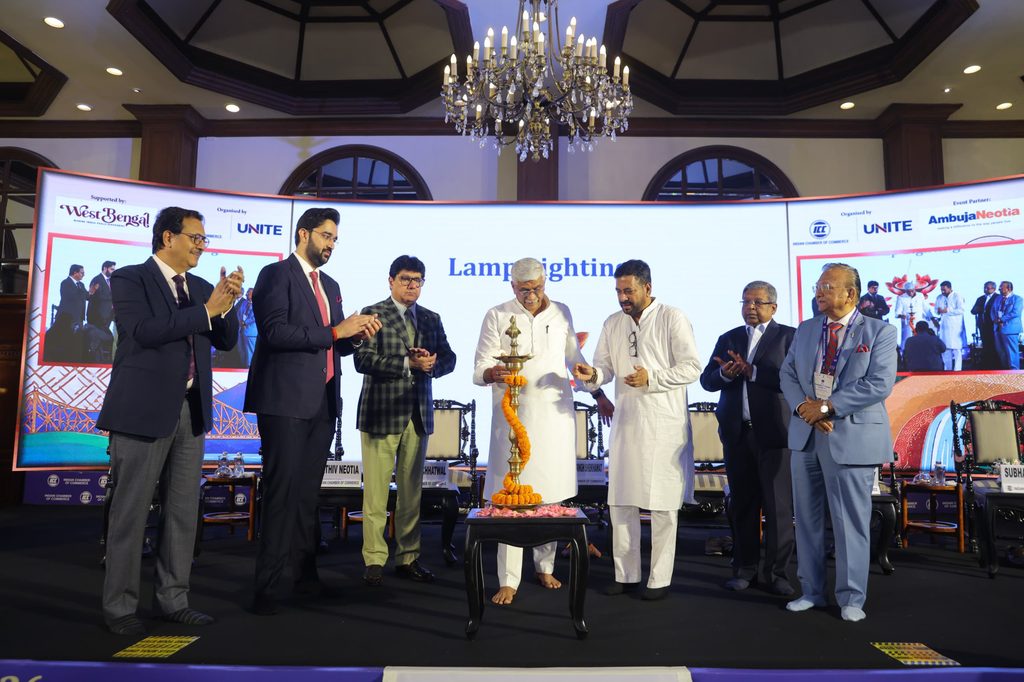
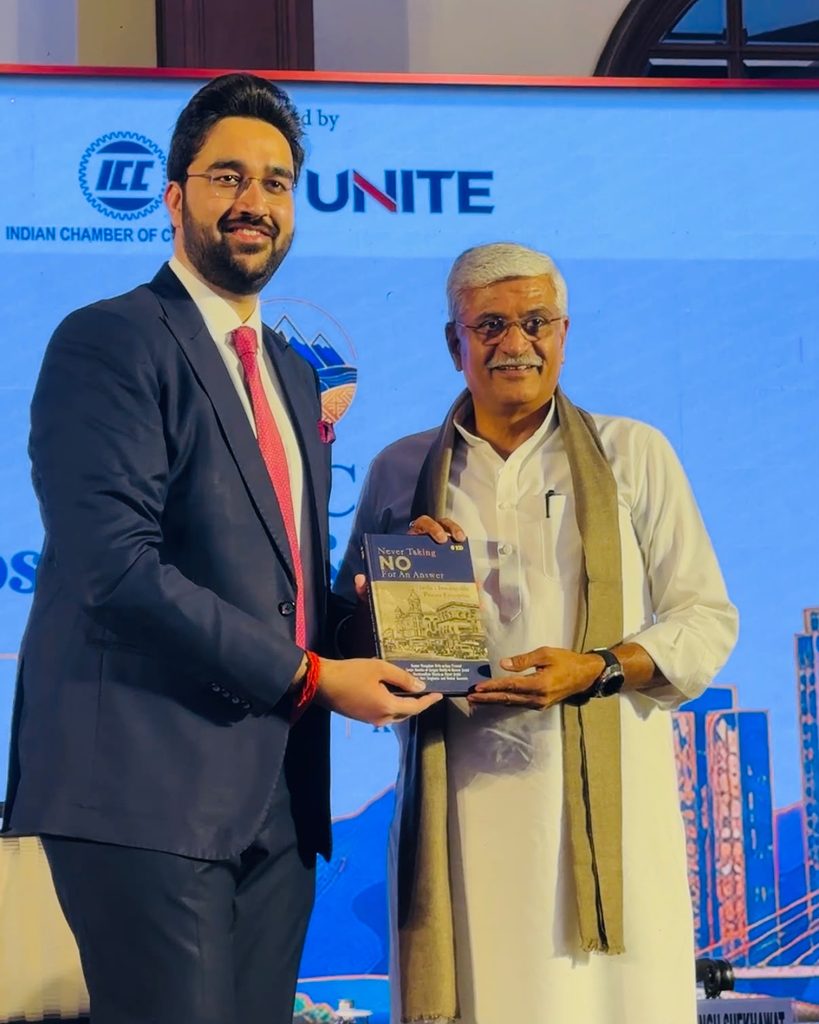
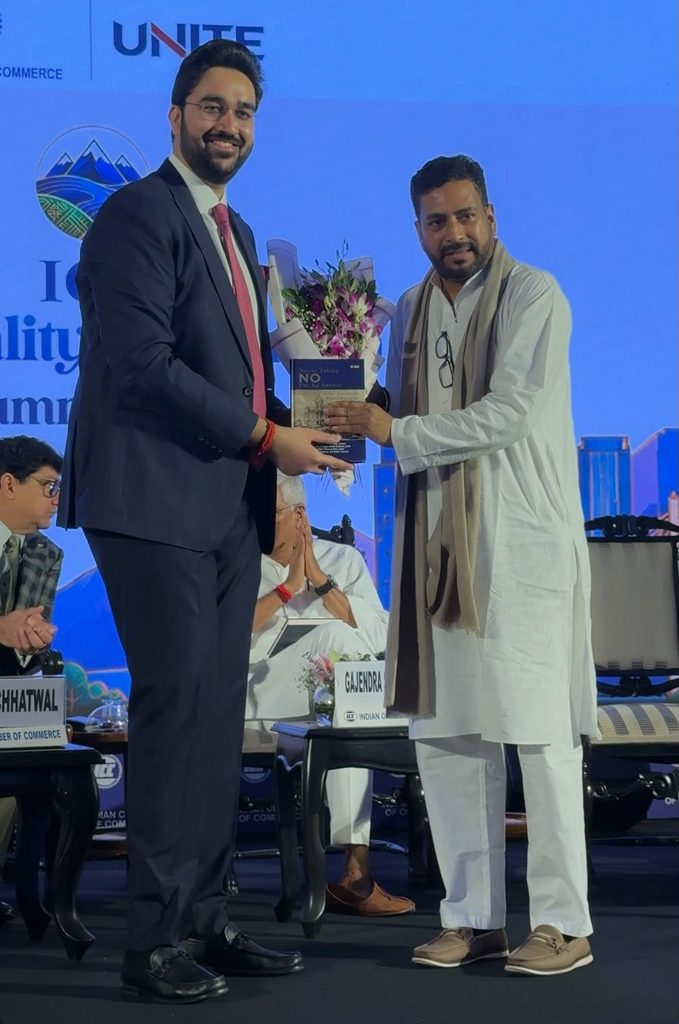
Kolkata, October 1, 2026: The Indian Chamber of Commerce (ICC) organised Hospitality & Tourism Summit 2026, featuring the stalwarts and key stakeholders from the tourism and hospitality sectors to discuss the role of tourism and hospitality in driving growth, with a focus on Eastern India.
In his opening address, Dr. Rajeev Singh, Director General, Indian Chamber of Commerce (ICC), said, “The new government, with its dynamism, is working to transform the state into a vibrant economic hub. The right kind of policies are being framed, and we will soon witness them. Bengal already has a sixth or seventh rank among tourist inflows in India, with 13% of the state GDP coming from the tourism sector alone. Considering the potential Bengal still has, the focus must be on unlocking the sector through the right policies, infrastructure, connectivity and, most importantly, building the ecosystem.”
Mr. Parthiv Neotia, Managing Director, Ambuja Neotia Group – Healthcare and President, ICC in his welcome address mentioned, “Tourism has a remarkable multiplier effect. A traveller who arrives in a city does not simply occupy a hotel; they eat at a restaurant, engage a guide and travel by road, ultimately driving economic activity across the region. For Eastern India, there is enormous opportunity. Of the 17-day average stay of an international tourist in India, around 60% of travellers spend their time between Delhi, Agra and Jaipur. There is a significant opportunity to attract a part of this demand to the East, particularly Bengal, by creating the infrastructure and hospitality that make these experiences accessible and memorable.”
While delivering his keynote address on “Tourism As a Growth Engine For Viksit Bharat”, Mr. Puneet Chhatwal, Managing Director & CEO, The Indian Hotels Company Limited (IHCL), said, “In operation and under development, we have already reached 42 hotels in the East and Northeast, against the target of 50, with at least half planned for West Bengal. The journey has just commenced, and there will be more news coming out of our partnership, our brands and our contribution to the tourism economy. Tourism also has a remarkable multiplier impact, creating up to 10 jobs on average globally, and foreign tourists are particularly important as they generate foreign exchange and contribute to the soft power of Brand India.”
Speaking at the summit, Mr. Barun Kumar Ray, IAS, Additional Chief Secretary, Non-Conventional & Renewable Energy Sources and Tourism (Additional Charge), Government of West Bengal, said, “We received commitments from leading players in the tourism industry for investments of more than ₹12,500 crore in West Bengal on World Tourism Day. The state has the second-highest foreign tourist footfall in the country after Maharashtra, according to Ministry of Tourism data. The Government of India has also sanctioned two global destinations for West Bengal, Darjeeling and Sundarbans, while the state is developing several projects across tourism infrastructure, river tourism, heritage and wildlife. We are open to working together with the industry, and if you have a plan, please approach us and we will do business together.”
On this occasion, Shri Sankar Ghosh, Hon’ble Minister-in-Charge, Tourism Department, Government of West Bengal, said, “The Investment Summit recently organised in Kolkata was a first-of-its-kind effort by a tourism department in the country. The summit received investment proposals of ₹12,634 crore, with an employment generation potential of around 22,000. The State Government also expects over ₹2,500 crore in direct infrastructure investment, backed by a fiscal allocation of ₹500 crore in 2026-27, to make destinations globally accessible. The state is also working on the development of destinations such as Mirik and Kalimpong, along with several other tourism projects across West Bengal. Our ultimate objective is to transform West Bengal into a major foreign-currency-earning state through modern, sustainable and technology-enabled tourism, while generating mass employment.”
Speaking on this occasion, Shri Gajendra Singh Shekhawat, Hon’ble Minister of Tourism, Government of India, added, “Tourism currently contributes slightly less than 6% to India’s GDP, and our objective is to take this to 7% in the next five years and 10% by 2047. While India’s overall tourism sector has registered around 14% growth, the country still has significant ground to cover given its immense potential. We now need to change the way we measure tourism, moving beyond tourist footfalls and international arrivals to parameters such as length of stay, tourist spending, employment generation and the benefits reaching local enterprises, crafts, culture and cuisine. The tourism of the future will be driven by experiences rather than monuments alone, with the entire journey from arrival to departure shaping the traveller’s experience. This also requires destination management organisations and stronger participation of local communities and stakeholders. At the same time, investment facilitation must improve through a true single-window system, while new opportunities in MICE, events and concert tourism can create additional economic activity. Kolkata, with its MICE infrastructure, hotels, connectivity, culture and heritage, has all the ingredients to emerge as a major tourism and events destination, and the industry and government need to work together to build and market that platform.”
In his vote of thanks, Mr. Subhash Goyal, Chairman, ICC National Committee on Tourism, said, “The comprehensive vision presented at the summit for West Bengal’s tourism sector, covering areas such as river cruises, aviation and tourism infrastructure, provides a strong foundation for attracting greater investment into the state. Greater air connectivity will also be critical for augmenting tourism, and efforts should be pursued with airlines to establish more direct connectivity between Kolkata and Europe. With tourism growing rapidly, the participation of industry leaders, investors and tour operators at the summit reflects the sector’s potential and the growing interest in West Bengal as a tourism destination. I thank all the speakers, delegates and participants for contributing to this important dialogue on the future of tourism and its role in the development of Bengal and Viksit Bharat.”
Mr. Harshavardhan Neotia, Chairman, Ambuja Neotia Group, said, “India has immense tourism potential, and tourism can play a significant role in driving economic development and strengthening the country’s soft power. The development of infrastructure is critical, as many tourism projects cannot be built through private investment alone. With infrastructure improving and the Government creating the right ecosystem, private investment in tourism is gaining momentum. West Bengal has significant historical and cultural assets, and as accessibility improves, the opportunities for tourism and investment will grow further. The development of Bengal is closely linked to the growth of Eastern India, and a rising Bengal will contribute significantly to India’s overall growth.”
Ms. Pooja Ray, Managing Director, Mayfair Hotels & Resorts, while speaking on the session said, “Building Hospitality Brands: Creating Destinations, Inspiring Tourism”, said, “Bengal has all the assets needed to become a strong tourism destination, from the mountains and tea gardens to heritage and culture. The priority now is to make these experiences more seamless and easier to access and book. Kolkata, for instance, needs to move beyond being seen as a transit destination and be positioned as a place where visitors can spend three days experiencing the city. The industry, government, airlines and tour operators need to work together to create and package such experiences. At the same time, hospitality needs greater investment in skill development and education, as access to the right talent remains one of the biggest challenges for the sector. At Mayfair, we have built our brand destination by destination, with a focus on local culture, personal service and experiences, and we believe Bengal needs more such homegrown brands.”
Mr. Varun Chaudhary, Managing Director, CG Corp Global, added, “The moment for Bengal has arrived, and the state has the opportunity to emerge as the true conduit connecting the Eastern Himalayan region with Nepal, Bhutan and Bangladesh. For us, Bengal is a very important market and our approach to the region is long term and investment driven. To unlock its tourism potential, the fundamentals have to be strengthened through better infrastructure and connectivity, along with the right incentives and a robust tourism policy. Hospitality and tourism assets must also be developed based on the character of each destination. We have followed this approach across our properties, and our experience in Bhutan shows how the right hospitality assets can contribute to taking an entire destination to a new level.”
Mr. Sagar Daryani, Co-Founder & CEO, Wow! Momo, said, “The key to scaling a food business is keeping operations simple. When you simplify the process, you can maintain consistency in taste and experience across markets. Food brands can also create destinations by making the experience aspirational and memorable.”
Mr. Zorawar Kalra, Founder, Massive Restaurants Pvt Ltd., said, “India’s food is one of the country’s greatest forms of cultural intellectual property, yet we have not fully used it to attract tourism. Destination dining can become a major tourism driver, and Bengal, with its culinary depth, has a significant role to play in this journey.”
Ms. Auroni Mookherjee, Celebrated Chef, said, “A chef today is not just an artist but a commercial artist. Creativity needs to be backed by sound business fundamentals, education and strategy. Building that financial and operational foundation is what ultimately gives chefs the freedom to create and take culinary experiences forward.”
Mr. Anurag Katriar, Founder & Managing Director, Indigo Hospitality Pvt Ltd., said, “The sheer depth and diversity of Indian cuisine is one of our biggest untapped soft-power assets for tourism. Food is at the heart of culture and travel, and we need to take greater pride in our own cuisines and make food a central part of how we promote India as a destination.”
Mr. Anjan Chatterjee, Founder, Chairman & Managing Director, Speciality Restaurants, said, “Food and hospitality have evolved significantly in Kolkata, with experiential dining now becoming an important part of the city’s tourism appeal. Durga Puja itself demonstrates the enormous demand for food and hospitality, while the emergence of new culinary destinations shows how much more potential the city has.”