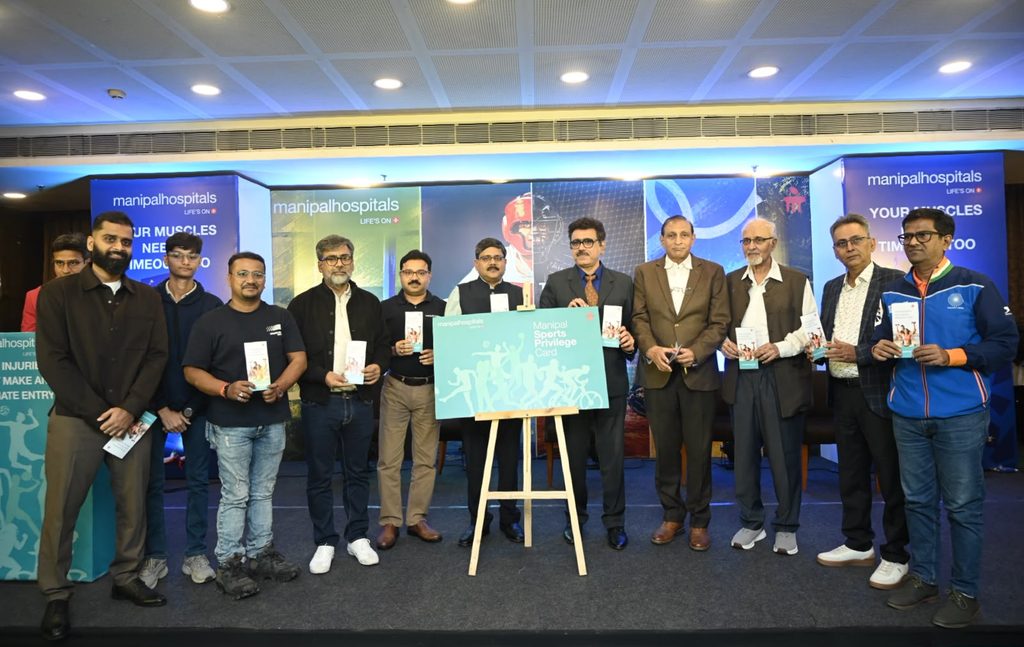
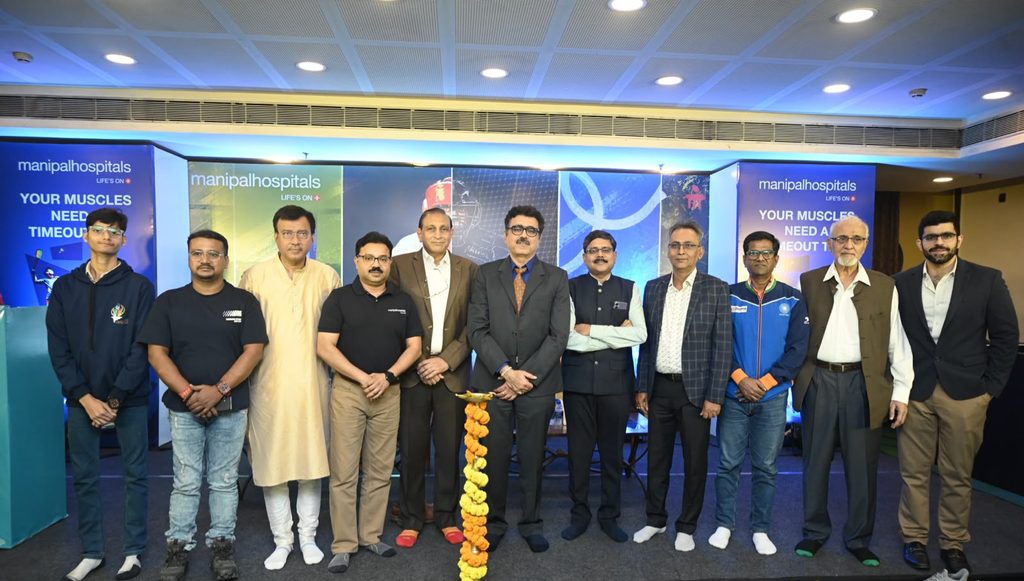
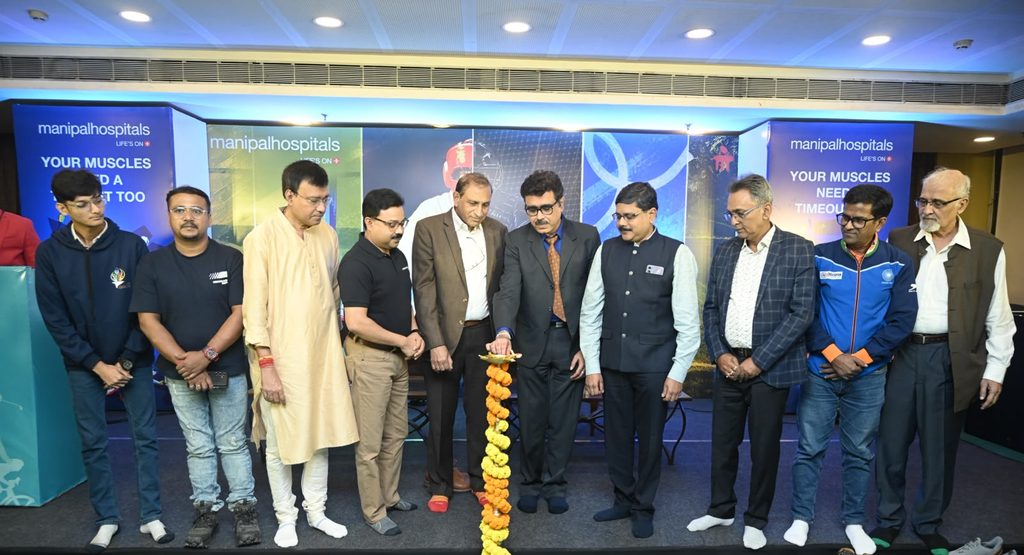
KOLKATA, November 27, 2026 — From surmounting career-imperiling trauma to reclaiming corporeal vigor, kinetic fluidity, and psychological fortitude within the competitive arena, an athlete’s convalescence epitomizes indomitable resilience, clinical erudition, and the transformative efficacy of contemporary sports medicine. Underscoring the burgeoning imperative of prophylactic vigilance, avant-garde therapeutic modalities, and empirically substantiated rehabilitation, Manipal Hospitals Kolkata convened the ‘Sports Injury Summit 2026’ under the resonant rubric ‘The Smarter Way to Stay in Play.’ This august conclave assembled preeminent orthopedic clinicians, athletic luminaries, kinesiologists, coaches, and emissaries from illustrious sporting federations.
The symposium endeavored to forge a synergistic nexus between medical sagacity and the pragmatic exigencies of high-stakes athletics. Discourses traversed prophylactic conditioning, expeditious diagnostics, sophisticated interventional therapeutics, minimally invasive surgical methodologies, and fastidiously calibrated rehabilitative regimens. Paramount emphasis was accorded to interdisciplinary synergy to expedite athletes’ safe reintegration into competitive arenas while insulating their long-term musculoskeletal integrity against premature senescence.
The illustrious assembly was graced by Dr. Vikash Kapoor, Director and Senior Consultant – Orthopaedics, Manipal Hospital EM Bypass, and Dr. Kanchan Bhattacharyya, Consultant – Orthopaedics, Manipal Hospital Dhakuria. Distinguished stalwarts of the sporting fraternity included:
- Biswarup Dey, Vice President of the Bengal Olympic Association and former Joint Secretary and Treasurer of the Cricket Association of Bengal;
- Sanjoy Dutta, Chairman of the Medical Sub-committee, The Cricket Association of Bengal;
- Abhinandan Chatterjee, Head Physiotherapist and Strength and Conditioning Coordinator of Mohun Bagan Super Giant;
- Rimo Saha, Tenzing Norgay National Award laureate and intrepid open-water swimmer who has traversed five international channels;
- Ejaz Ahmed, Senior Vice President of Hockey Kalimpong District, former Executive Board Member of Hockey Bengal, and an FIH- and AHF-certified tactician boasting over four decades of tenure as a player, mentor, and administrator;
- Md. Salahuddin Parvez, Chairman of the Umpires Committee, National Hockey Umpire, and Technical Official of Hockey India—a decorated former Assistant Commissioner of Police and recipient of the United Nations Peace Medal for his 2003 deployment in Kosovo.
The forum furnished an authoritative crucible for medical practitioners and sporting stakeholders to cross-pollinate insights and interrogate prevailing impediments alongside nascent frontiers in sports traumatology.
Athletic pathologies—most notably anterior cruciate ligament (ACL) ruptures, meniscal lacerations, glenohumeral dislocations, rotator cuff avulsions, ankle sprains, stress fractures, and tendinopathies—persist as formidable adversaries to both elite competitors and recreational aficionados. Suboptimal somatic conditioning, repetitive biomechanical attrition, flawed kinetic execution, excessive physical exertion, and truncated convalescence markedly exacerbate vulnerability to trauma. Moreover, dilatory diagnosis and desultory rehabilitation frequently precipitate recidivistic injuries, intractable morbidity, circumscribed range of motion, and the premature degeneration of articular architecture.
Epochal breakthroughs in orthopedics and sports medicine have precipitated a paradigm shift in the clinical stewardship of intricate athletic trauma. Minimally invasive interventions—encompassing arthroscopic ACL reconstruction, meniscal repair, arthroscopic shoulder stabilization, and rotator cuff restoration—have exponentially augmented the therapeutic armamentarium available to incapacitated athletes. Where clinically indicated, these precision techniques empower surgeons to rectify complex ligamentous, cartilaginous, and tendinous derangements via diminutive portals, thereby attenuating iatrogenic tissue trauma, postoperative algia, and convalescent latency relative to conventional open arthrotomies.
Beyond surgical dexterity, the summit accentuated the indispensable primacy of non-operative modalities, integrating physiotherapy, progressive resistance conditioning, neuromuscular re-education, and bespoke rehabilitative trajectories. Clinicians vociferously affirmed that an athlete’s clearance for competitive re-entry must never be predicated solely upon the abatement of nociception. Rather, rigorous functional benchmarks—encompassing the restitution of muscular torque, articular proprioception, kinetic coordination, and psychological readiness—constitute non-negotiable prerequisites to obviate reinjury and sustain peak athletic longevity.
Underscoring the exigent need for prophylactic literacy and holistic convalescence, Dr. Kanchan Bhattacharyya, Consultant – Orthopaedics, Manipal Hospital Dhakuria, observed: “A quintessential impediment within our sporting landscape is the glaring paucity of prophylactic infrastructure and awareness, compounded by the impetuosity of athletes to resume competition prior to objective verification of match-fitness. Young competitors are seldom deterred by incipient pain, effusions, or subtle articular instabilities—harbingers that invariably escalate into catastrophic pathologies. Athletes must be inculcated with the discipline to report somatic anomalies immediately, as seemingly innocuous impairments frequently presage grave underlying sequelae demanding prompt clinical scrutiny.”
Dr. Bhattacharyya further elucidated: “While surgical intervention is by no means ubiquitous, timely diagnostics and judicious therapeutics profoundly dictate prognostic trajectories. Prophylactic pillars—structured warm-ups, hypertrophy training, dynamic flexibility, biomechanical fidelity, sport-specific reconditioning, and inviolable recovery intervals—are equally sacrosanct. Concurrently, psychological fortification is imperative. Our overarching mandate transcends mere anatomical repair; we strive to resuscitate self-efficacy, restore somatic prowess, and insulate athletes against recurrent trauma.”
Expounding upon the metamorphosis of modern sports medicine, Dr. Vikash Kapoor, Director and Senior Consultant – Orthopaedics, Manipal Hospital EM Bypass, remarked: “Sports medicine has undergone a profound evolution, wherein high-resolution diagnostic imaging, arthroscopic finesse, and minimally invasive surgical paradigms enable us to remediate labyrinthine athletic injuries with unprecedented exactitude. Pathologies such as ACL ruptures, meniscal tears, and glenohumeral instability—once harbingers of premature retirement—are now routinely surmounted through individualized therapeutics and structured convalescence.”
Dr. Kapoor added: “Nevertheless, surgical virtuosity in isolation cannot guarantee optimal functional restitution. A cohesive, multidisciplinary coalition uniting orthopedic surgeons, physiotherapists, strength coaches, and sporting mentors is indispensable to orchestrate a secure, enduring return to play. Through vanguard initiatives like the Sports Injury Summit, we endeavor to fortify the alliance between medicine and athletics, empowering competitors to pursue excellence without mortgaging their long-term physical sovereignty.”
Through the Sports Injury Summit 2026, Manipal Hospitals Kolkata reiterated its resolute dedication to elevating specialized orthopedic care and advancing sports medicine while cultivating enduring alliances across the sporting ecosystem. The deliberations crystallized the necessity of synthesizing clinical perspicacity, cutting-edge medical instrumentation, preventive prophylaxis, and empirically validated rehabilitation—ultimately fostering a safer, more resilient sporting milieu where athletes may scale the zenith of achievement with their corporeal well-being intact.
About Manipal Hospitals
Manipal Hospitals stands among India’s preeminent integrated healthcare conglomerates, ministering to approximately 8 million patients annually with an unyielding commitment to accessible, world-class clinical care. Its expansive pan-Indian footprint encompasses 50 hospitals housing over 13,400 licensed beds across 14 States and Union Territories. Measured by inpatient capacity, it constitutes India’s largest multispecialty hospital network, anchored by an erudite cadre of over 11,000 physicians and a workforce exceeding 25,000 personnel. Driven by a patient-centric ethos, Manipal Hospitals harmonizes clinical mastery with state-of-the-art medical technology, empirical research, and innovation to serve a global clientele. Its sustained fidelity to clinical rigor and operational excellence is attested by NABH accreditation across the network, alongside NABL accreditations and accolades for superior nursing and emergency medicine.