Kolkata, 10 November 2026 (Tuesday):
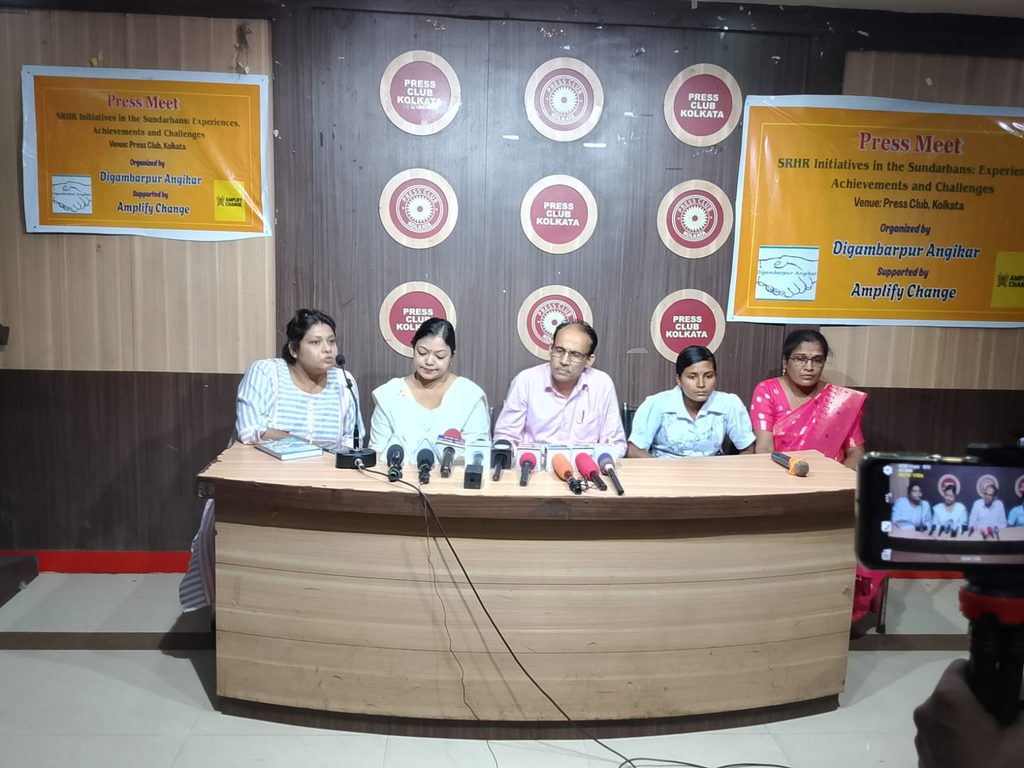
Digambarpur Angikar, a South 24 Parganas-based NGO working in the southern parts of the district, organised a press meet today to highlight its ongoing Sexual and Reproductive Health and Rights (SRHR) project, supported by AmplifyChange, a UK-based funding organisation.
The project has been working extensively for the past two years with women and adolescent girls across 10 Gram Panchayats and 50 villages of Patharpratima Block, South 24 Parganas. A major focus is on marginalised fisherwomen whose livelihoods require them to spend five to six hours or more every day in the saline waters of the Bay of Bengal, collecting fish, meen, prawns and shrimps.
The project aims to promote the key messages like ‘Know Your Body, Know Your Rights’ and ‘My Body, My Rights’ — while addressing critical issues such as menstrual health and hygiene management, reproductive health, reproductive tract infections (RTI), sexually transmitted infections (STI), family planning, birth spacing, contraception and safe abortion practices.
The panel discussion featured “Mr. Sourav Sanigrahi, Senior Project Manager; Dr. Somdatta Neogi, Monitoring and Evaluation Officer; Dr. Debarati Sarkar, Consultant and Researcher; and Runu Jana, an adolescent group member from Ramganga Gram Panchayat along with Kakoli Maity representing the community’s adolescent girls and self-help group members.
The panel highlighted the project’s grassroots initiatives, including regular home visits, community awareness programmes, stakeholder engagement and collaboration with local vendors to improve the availability of sanitary napkins and contraceptives, including condoms and oral contraceptive pills (OCPs), in the geographically isolated villages.
An important component of the initiative is working with fisherwomen community to promote personal and menstrual hygiene, particularly after prolonged exposure to saline water. Women are encouraged to maintain proper intimate hygiene, dry themselves thoroughly after coming out of the water, use sanitary napkins or follow hygienic practices when using reusable cloth, and seek timely medical advice for infections. The project also promotes informed contraceptive choices, appropriate birth spacing, family planning and awareness of cervical cancer prevention, including HPV vaccination.
One of the project’s significant achievements is the emergence of adolescent girls as active community leaders. Adolescent groups (Kishori Dals) have been formed in the villages, and girls are managing their own adolescent information and awareness booths under the name “’Ujjan”. These platforms provide opportunities for girls to access information, discuss sensitive health concerns and participate in community-level awareness initiatives. The transformation is particularly encouraging, as many girls who once hesitated to step outside their homes are now confidently participating in public discussions and advocacy.
The project has also established strong linkages with ASHA and ANM workers, local healthcare providers, Panchayat representatives, block-level officials, BMOH, CMOH and other health stakeholders. However, Digambarpur Angikar emphasised the need for continued institutional cooperation, stronger advocacy and improved access to essential healthcare services for women and adolescents living in these remote and geographically isolated areas.
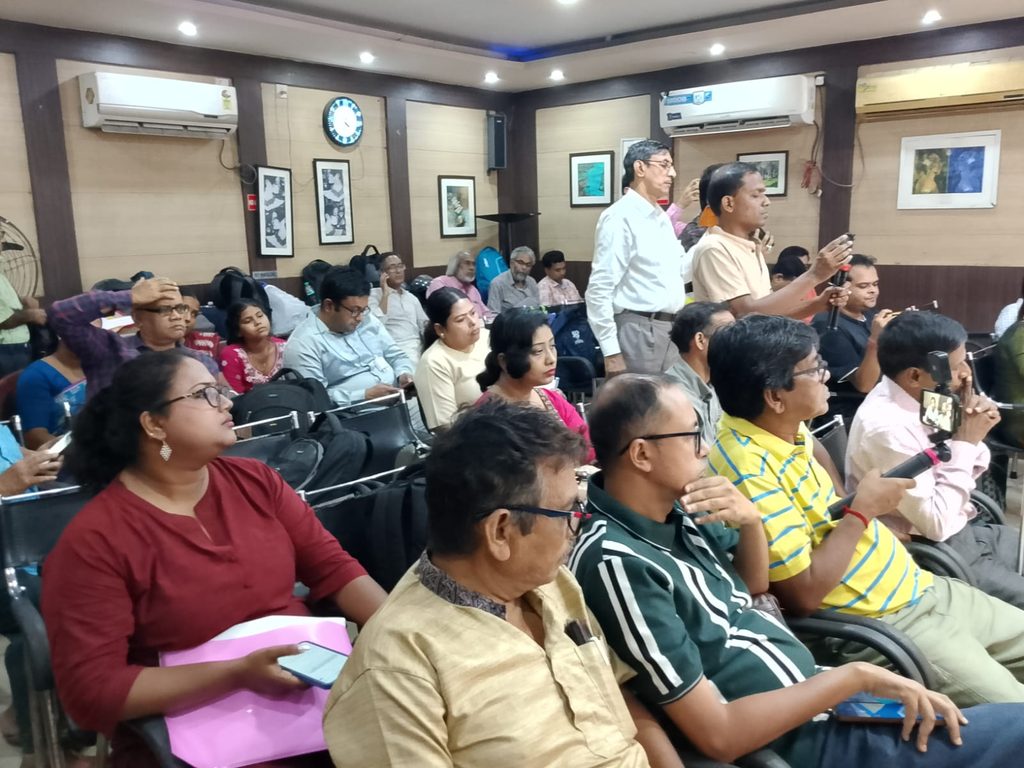
The press meet witnessed participation from representatives of “37 media houses”, representing print, electronic and social media platforms in Bengali, English and Hindi, with circulation and outreach across South 24 Parganas, West Bengal and beyond. Journalists actively interacted with the panel and community representatives, raising questions about the challenges, achievements and future possibilities of SRHR interventions.
The participation of adolescent girls themselves was particularly noteworthy. Their journey from silence and hesitation to confidently travelling to Kolkata and speaking about their rights reflects the gradual social transformation that the project seeks to achieve.
Through this press meet, Digambarpur Angikar appealed to media professionals to bring greater visibility to the often-unspoken and sensitive issues of sexual and reproductive health and rights. The organisation seeks continued media support, public awareness and collective advocacy to ensure that marginalised women and adolescent girls can exercise their rights and access essential health services with dignity, knowledge and confidence.
“The central message of the initiative remains simple yet powerful: Every woman and every girl has the right to know her body, understand her rights and make informed decisions about her health and life.”